PASEC2024 · Data collected in 2025
Primary school teachers, at the heart of the quality of apprenticeships
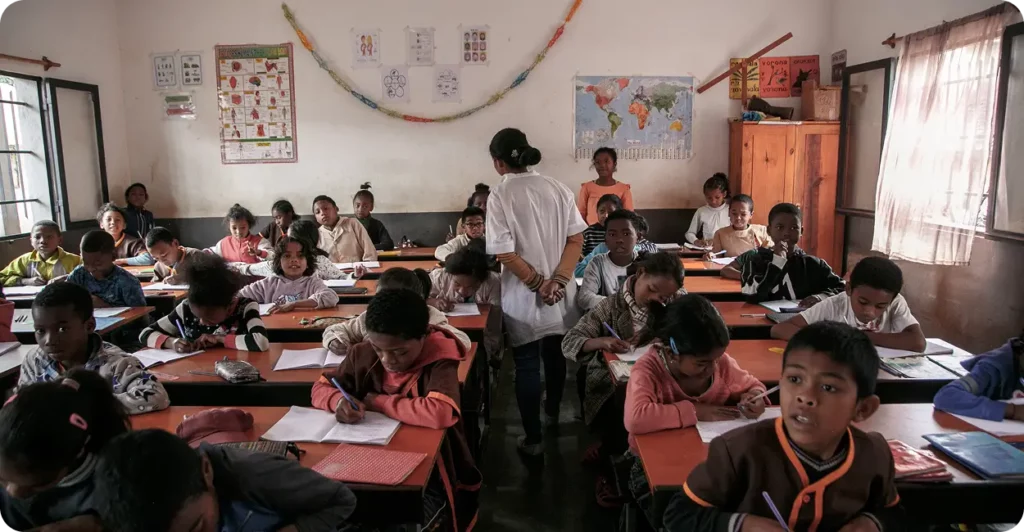
What disciplinary and didactic knowledge do teachers possess? In 16 countries, PASEC2024 assesses the skills of primary school teachers, their profiles and their working conditions, in order to shed light on training and support needs.

Disponible en
- French
- English (Coming soon) Bientôt disponible
- Portuguese (Coming soon) Bientôt disponible
What needs to be remembered
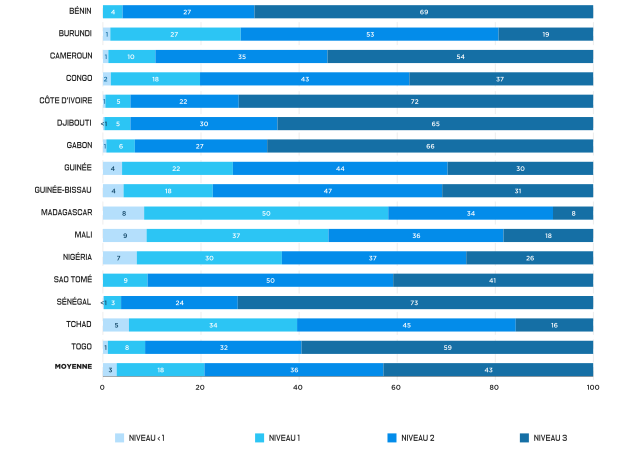
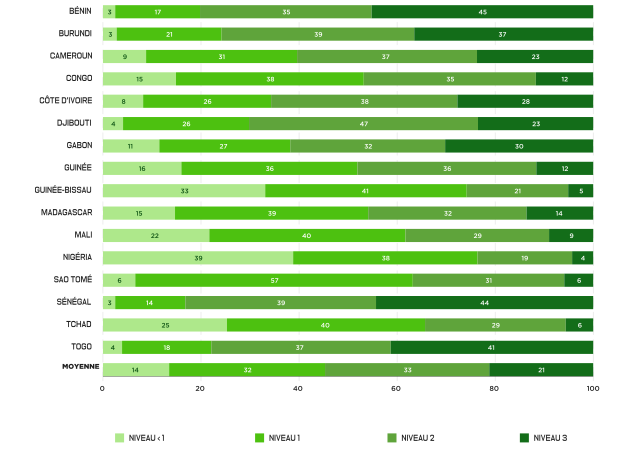
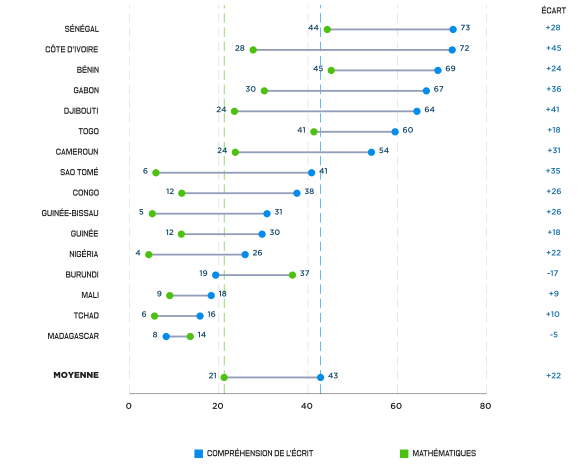
In written comprehension, 43 % of the teachers reach level 3 of the skill scale, compared to 21 % in mathematics. The differences between countries are significant, and the teacher profiles vary greatly depending on status, the field of practice, and the training received.
-
43 %
Teachers at level 3 in written comprehension
-
21 %
Teachers at level 3 in mathematics
-
23 254
Teachers investigated in 16 countries
-
47
Average number of students per class
Three key messages
-
Stronger writing skills than math skills
The proportion of teachers at level 3 is higher in written comprehension in 14 of the 16 countries.
-
The differences between contexts are also due to the distribution of teacher profiles.
The differences between rural and urban areas or between the public and private sectors diminish significantly when training, experience and status are taken into account.
-
Working conditions weigh on professional development
Heavy workloads, irregular salaries and the accumulation of activities limit the possibilities for sustainable skills development.
Graphs to remember
-
Reading Comprehension
Distribution of teachers according to levels of written comprehension skills
-
Mathematics
Distribution of teachers according to levels of proficiency in mathematics
-
Percentage of teachers reaching level 3 in written comprehension and mathematics
-

-
Average score for mastery of written content comprehension by seniority level, by country
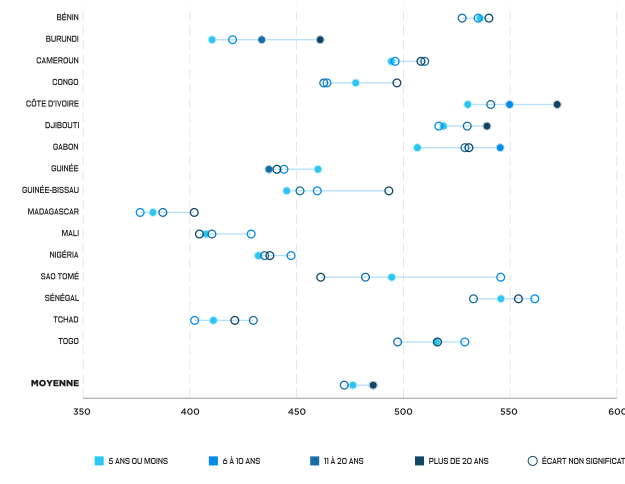
Source: PASEC (2026). PASEC2024 – The skills of primary school teachers in sub-Saharan Africa. CONFEMEN.
-
Average score for mastering mathematics content by seniority, by country
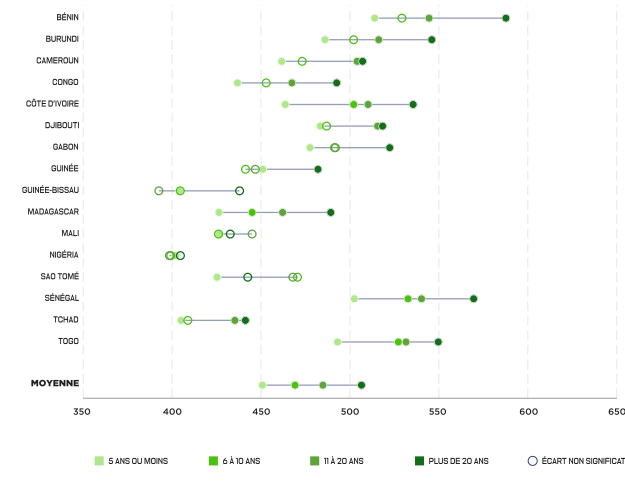
The historical evolution chart only compares the countries and scales for which comparability has been established. You can select 2019–2025 or 2014–2025 in the explorer.
Access the explorerHow to interpret These data
Competence levels have definitions specific to the data and populations studied. Comparisons between countries or editions require methodological precautions.
Reference frameworks
Methodological documents of the PASEC2024 evaluation.
-
Beginning of primary school
-
End of primary school
-
End of high school
-
Teachers
-
Questionnaires
Manuals and methodological tools
Methodological documents of the PASEC2024 evaluation.
-
Manual for the national responsible
-
Sampling manual
-
Classification and codification
-
Data cleaning manual
Access to the databases PASEC2024 data
The use of the data is the sole responsibility of the user. CONFEMEN cannot be held responsible for any use that does not comply with the commitments signed.